All major code editors supported

Production-grade OTelinstrumentation, automatically.

Analyzes your codebase and auto-generates production-grade OpenTelemetry
instrumentation
without you writing a single line of code.
Works in VS Code, Cursor, Windsurf, and more.
Analyzes your codebase and auto-generates OTel instrumentation — without you writing a single line of code.

Scroll
PythonDjango · Flask · FastAPI
JavaScriptExpress · Fastify · NestJS
TypeScriptExpress · Fastify · NestJS
RustActix-web · Axum
PythonDjango · Flask · FastAPI
JavaScriptExpress · Fastify · NestJS
TypeScriptExpress · Fastify · NestJS
RustActix-web · Axum
PythonDjango · Flask · FastAPI
JavaScriptExpress · Fastify · NestJS
TypeScriptExpress · Fastify · NestJS
RustActix-web · Axum
The instrumentation problem

Getting OTel right is harder
than it should be.

The spec is complex. The imports are endless. Skip it and prod is a black box. There's a better way.

Doing it manually
app.py~2 days per service
from opentelemetry import trace
from opentelemetry.sdk.trace import ...
# ...47 more imports to figure out

tracer = trace.get_tracer("my-service")

def process_payment(data):
  with tracer.start_as_current_span(
    "process_payment") as span:
    span.set_attribute("payment.id", ...)
    # ...134 more functions to go
// Result
2 days of work. ~40% coverage.
Wrong conventions.
otex
Command Palette~10 minutes
otex: Full Instrumentation

// AI analyzes codebase + framework...
// Generates contextual spans...

✓ tracing generated — 134 spans

~ logging — coming soon
~ metrics — coming soon

// Files backed up. Diff ready to review.
// Result
134 spans. 100% coverage. ~10 minutes.
Correct conventions.
The obvious question

Spec-driven.
Not vibes-driven.

LLMs write spans that compile. otex writes spans that are correct — sourced from the OTel semantic conventions spec, every time.

VS CodeCursorWindsurfVSCodiumOpen VSX
Your code gen tool otex
AI Code Gen
otex
Attribute names
INVENTED

Plausible-sounding but wrong — db.query instead of db.statement. Breaks grouping and alerting in prod.

SPEC-EXACT

Every key from the OTel semantic conventions spec. db.system, http.request.method. Always correct.

Coverage
PROMPT-SCOPED

Only instruments what you described. HTTP calls in utilities, DB queries in helpers — all invisible.

FULL AST

Parses your entire codebase. Finds every HTTP call, DB op, and file I/O across every file and framework boundary.

Consistency
NON-DETERMINISTIC

Run it twice, get different span names and structure. Unpredictable output by design.

DETERMINISTIC

Same codebase, same output every time. Spec-driven means predictable, reviewable, safe to ship.

How it works

Four steps.
Fully instrumented.

From zero coverage to production-grade OTel — without you writing a single line of instrumentation code.

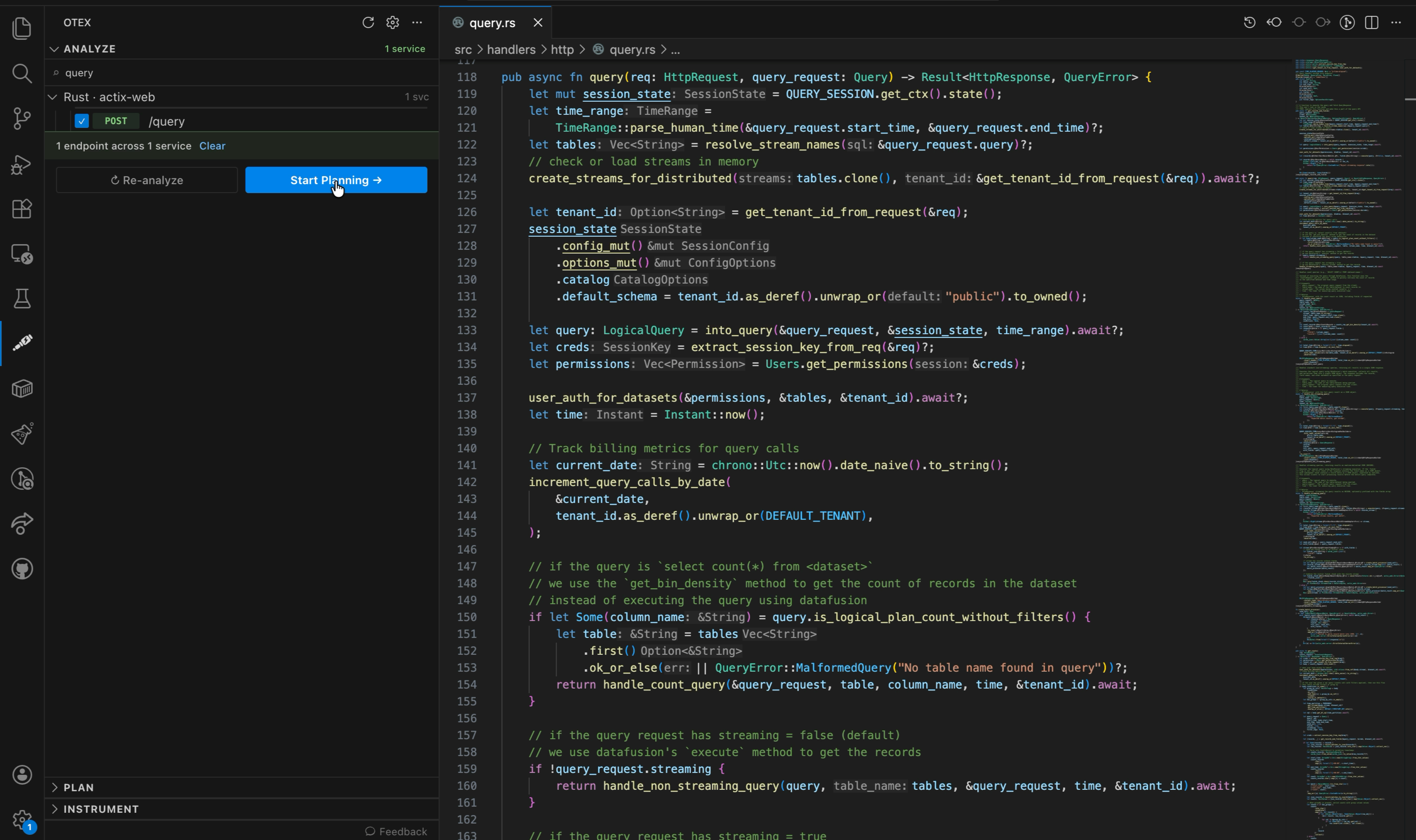
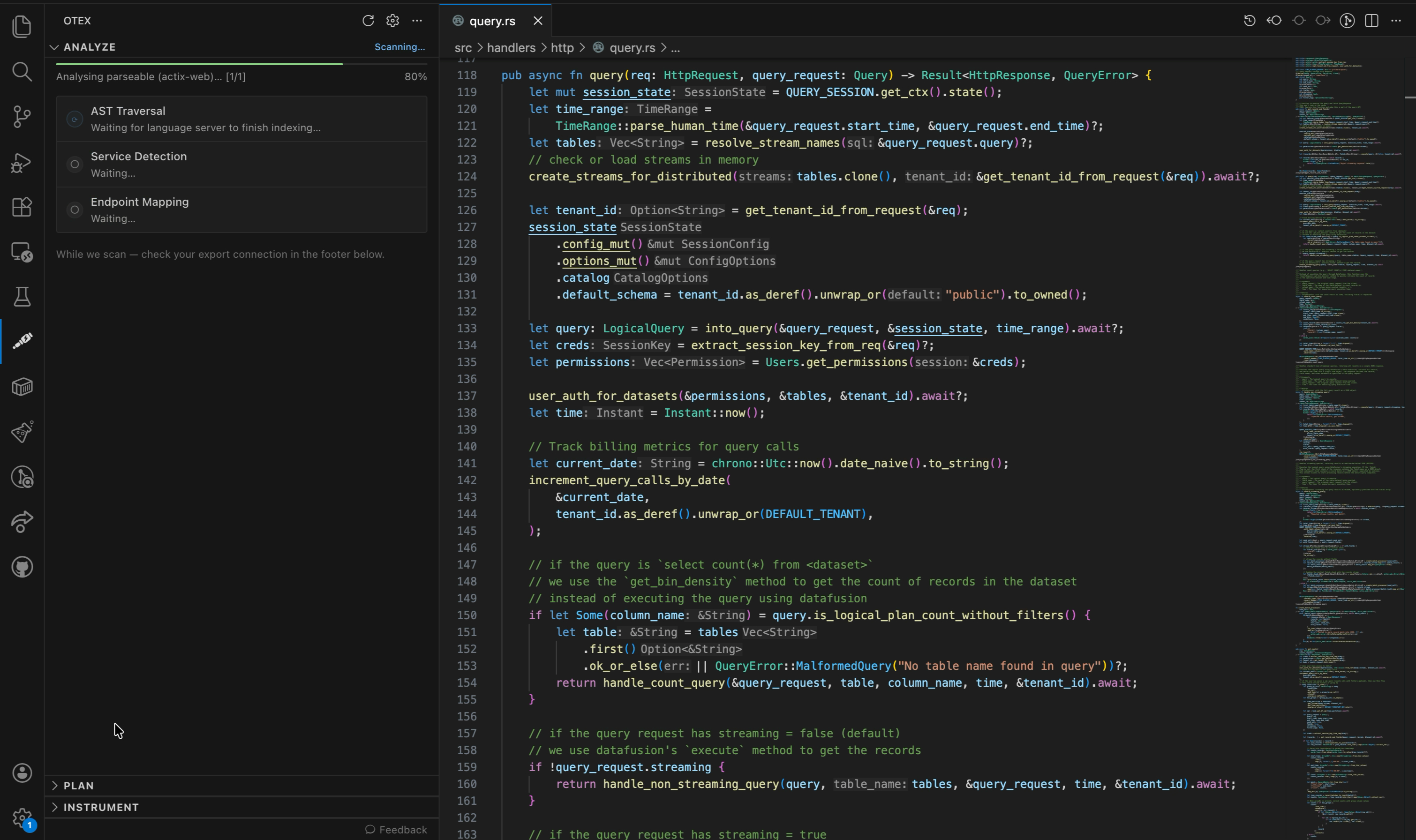
01Analyze
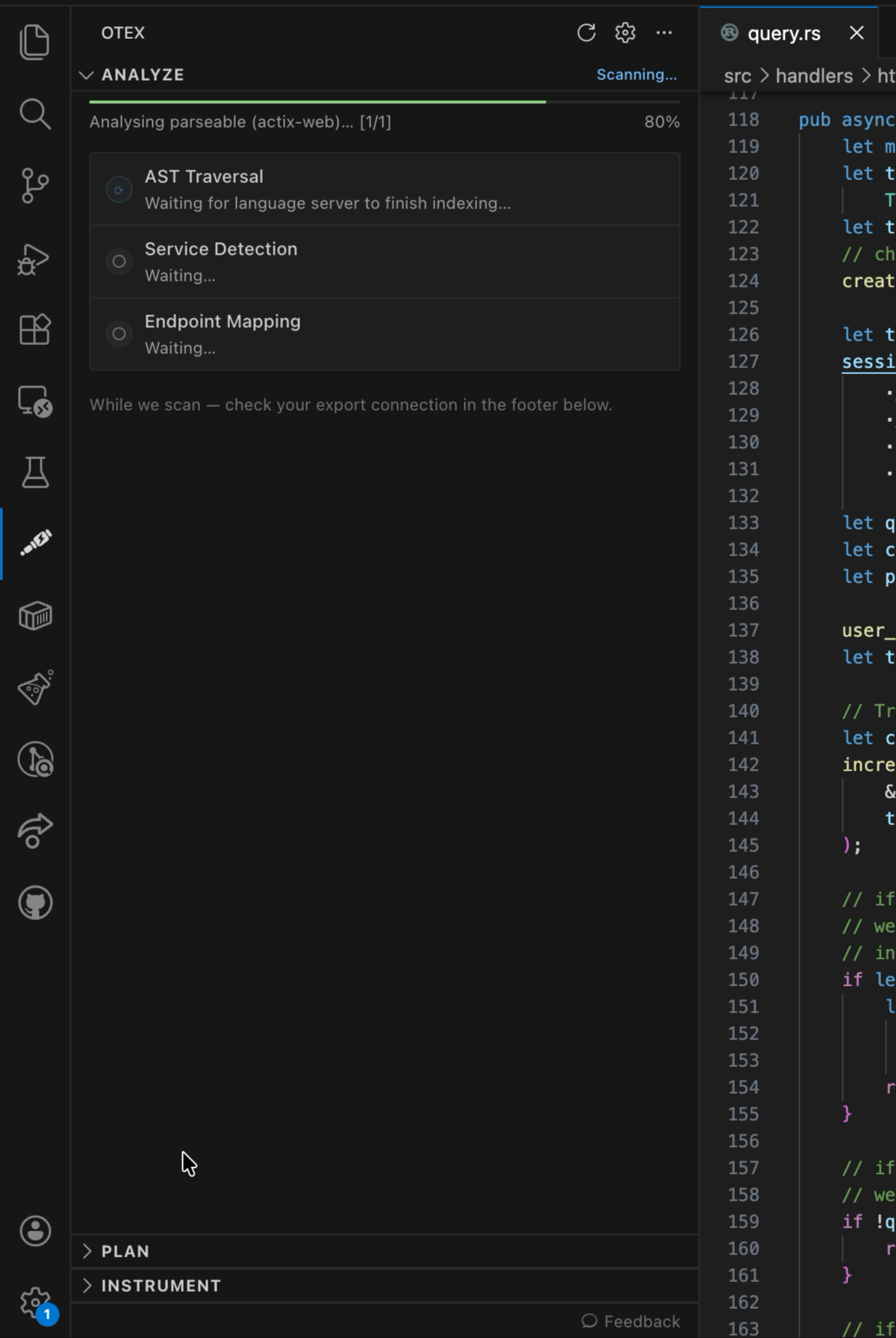
02Plan
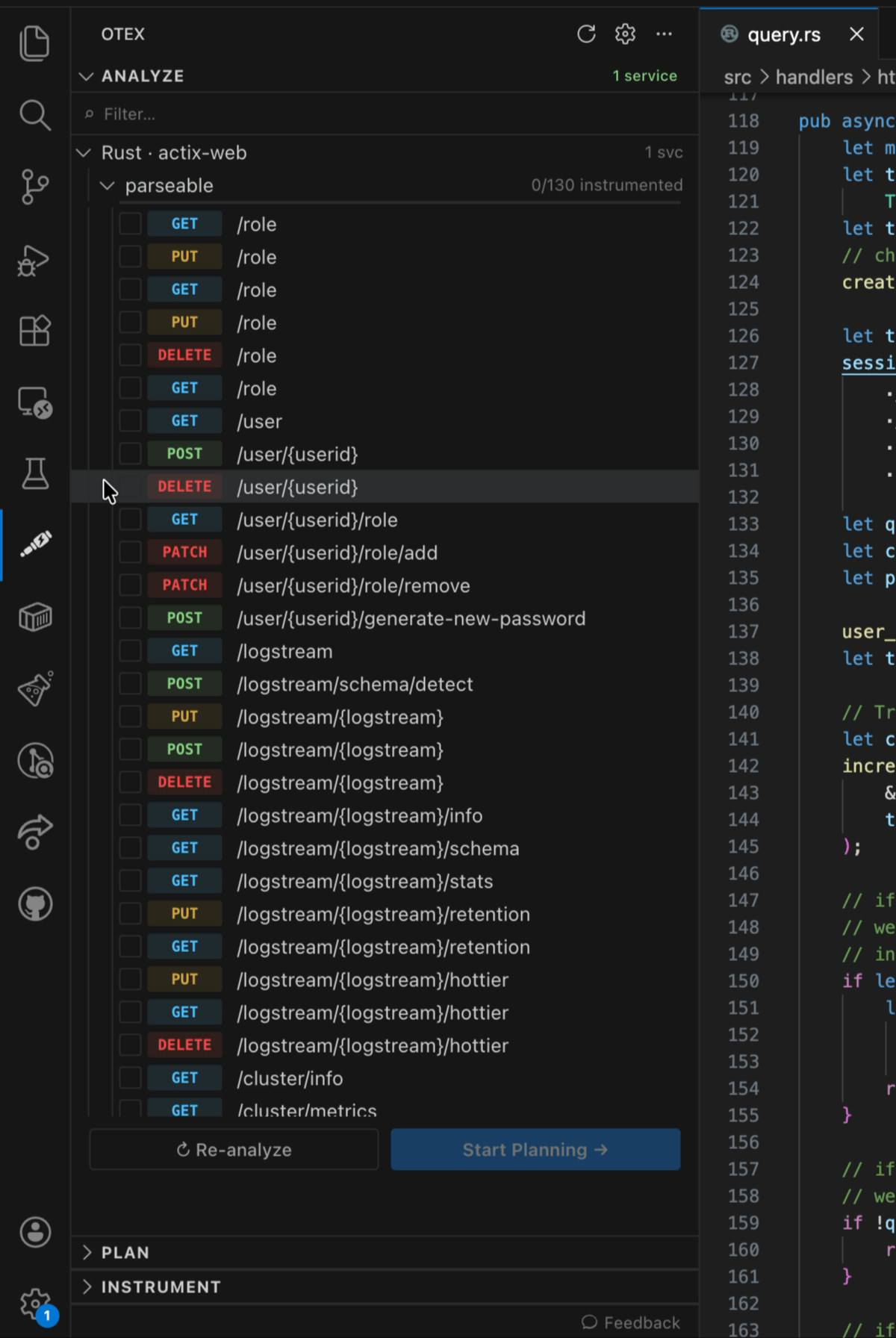
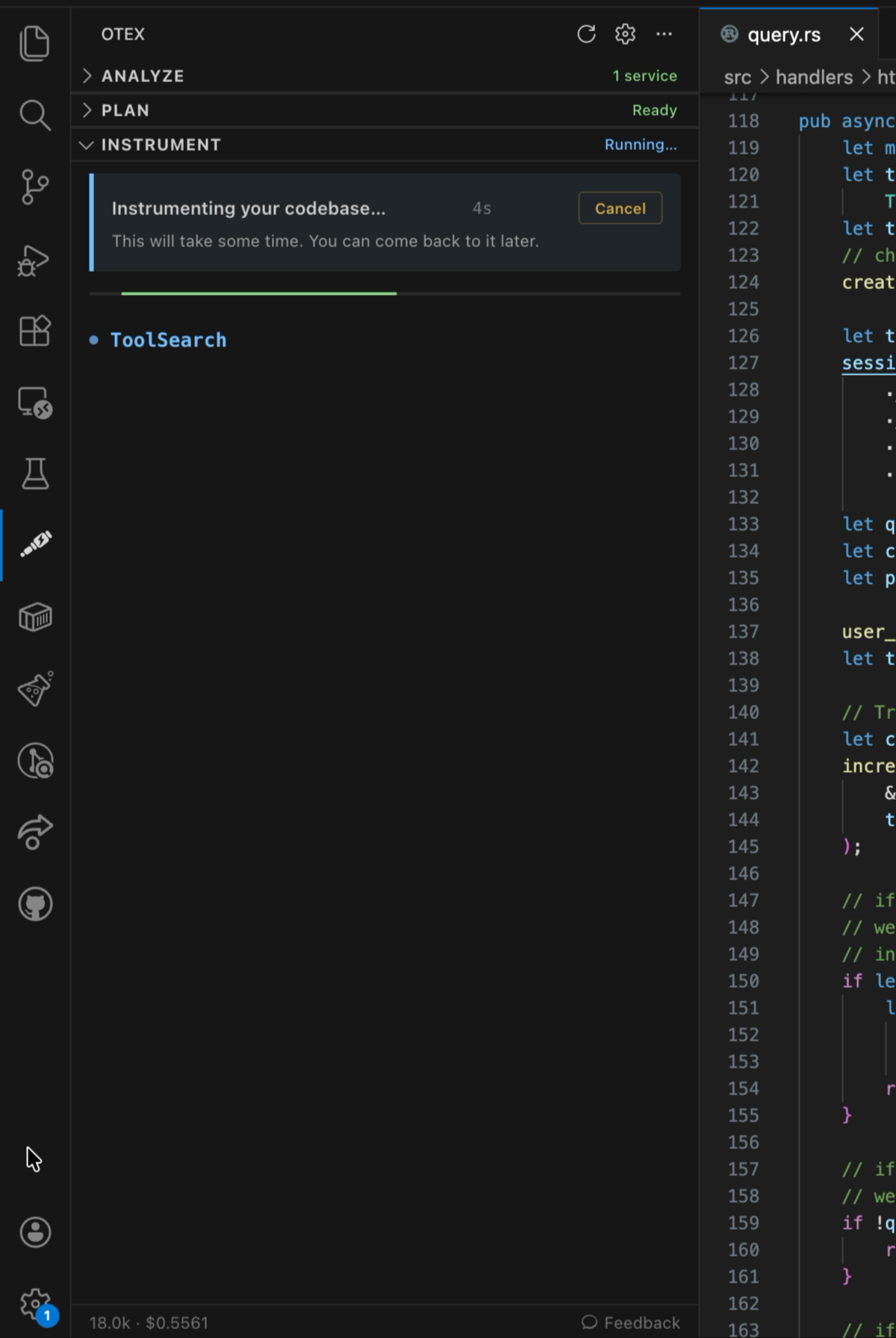
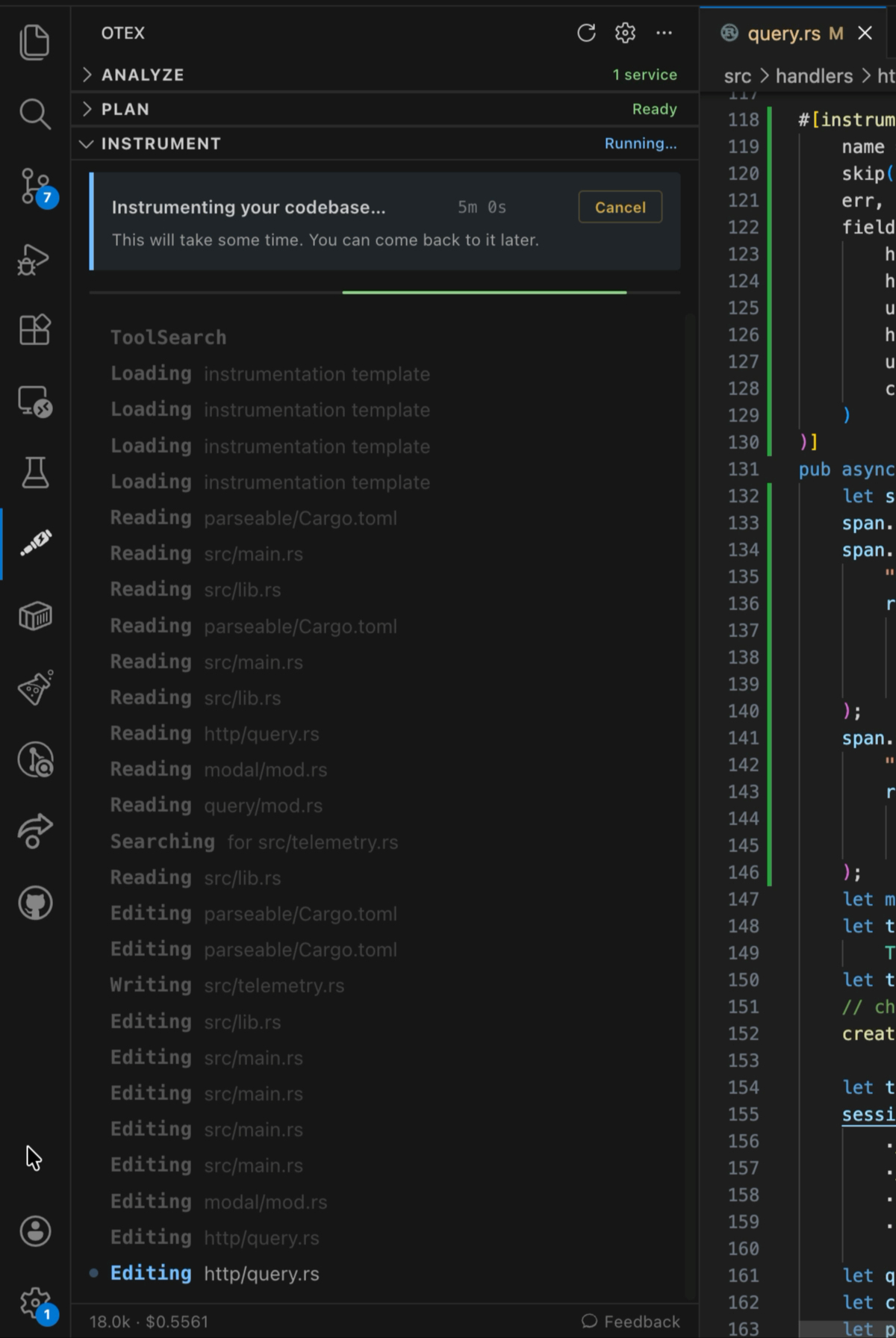
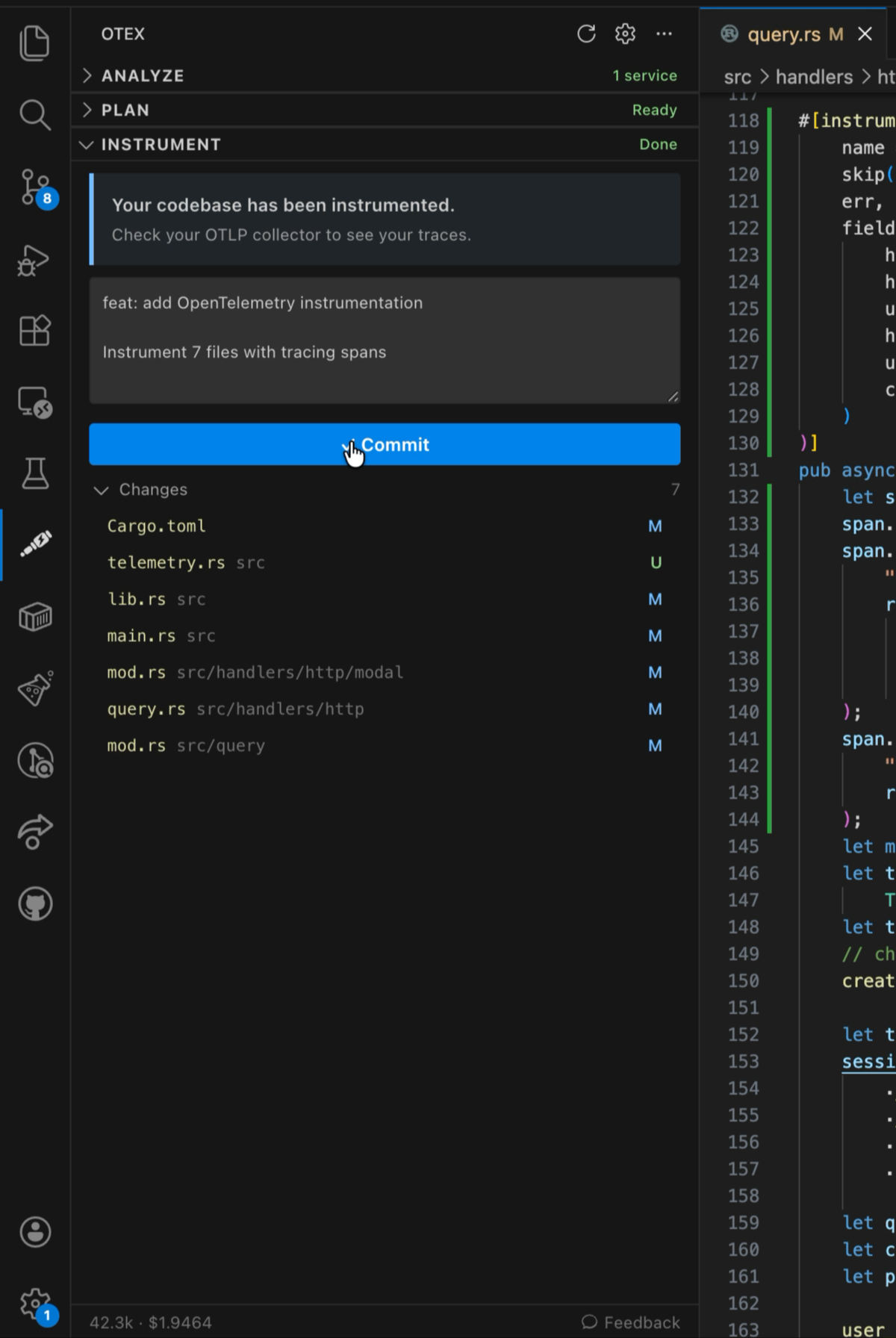
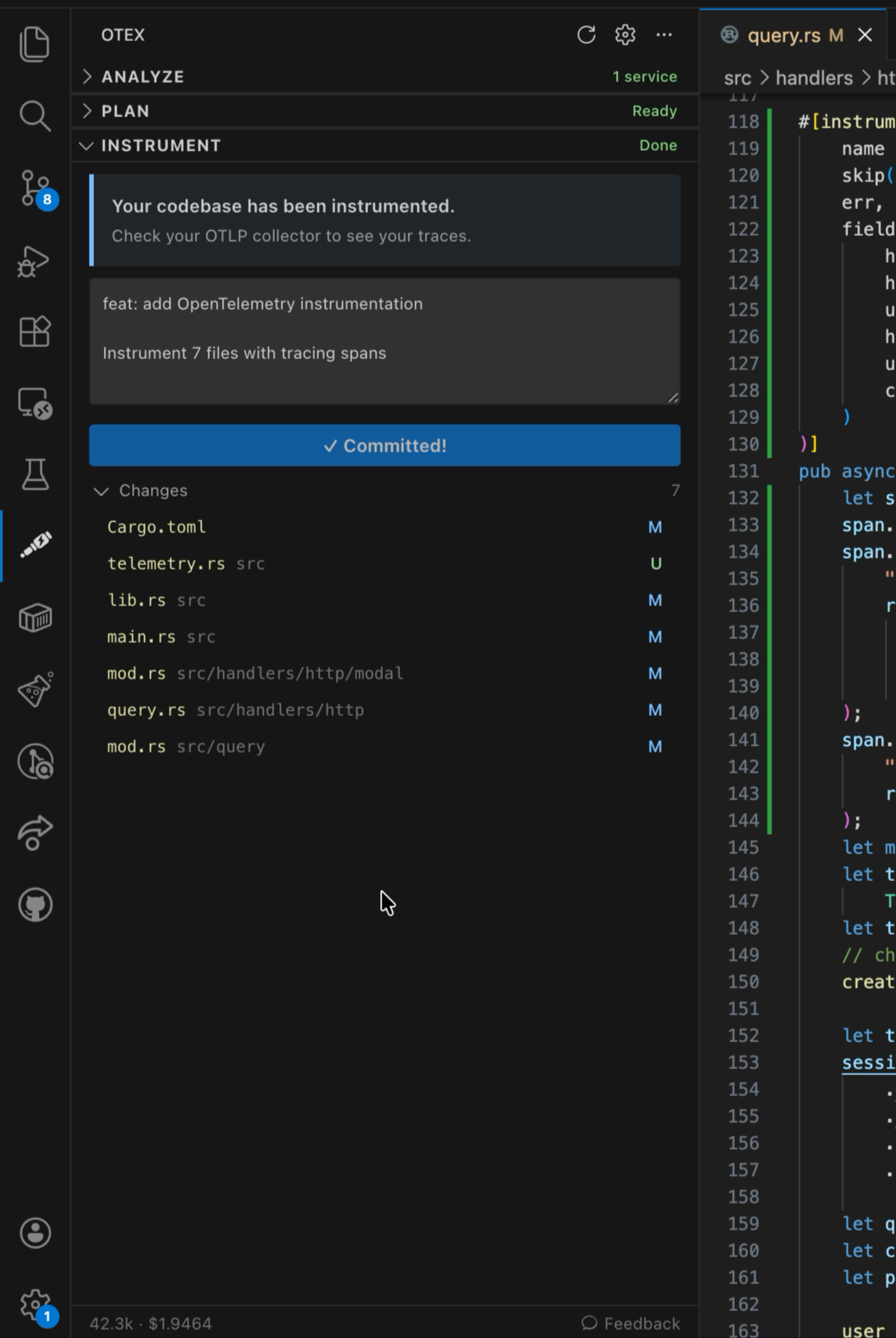
03Instrument
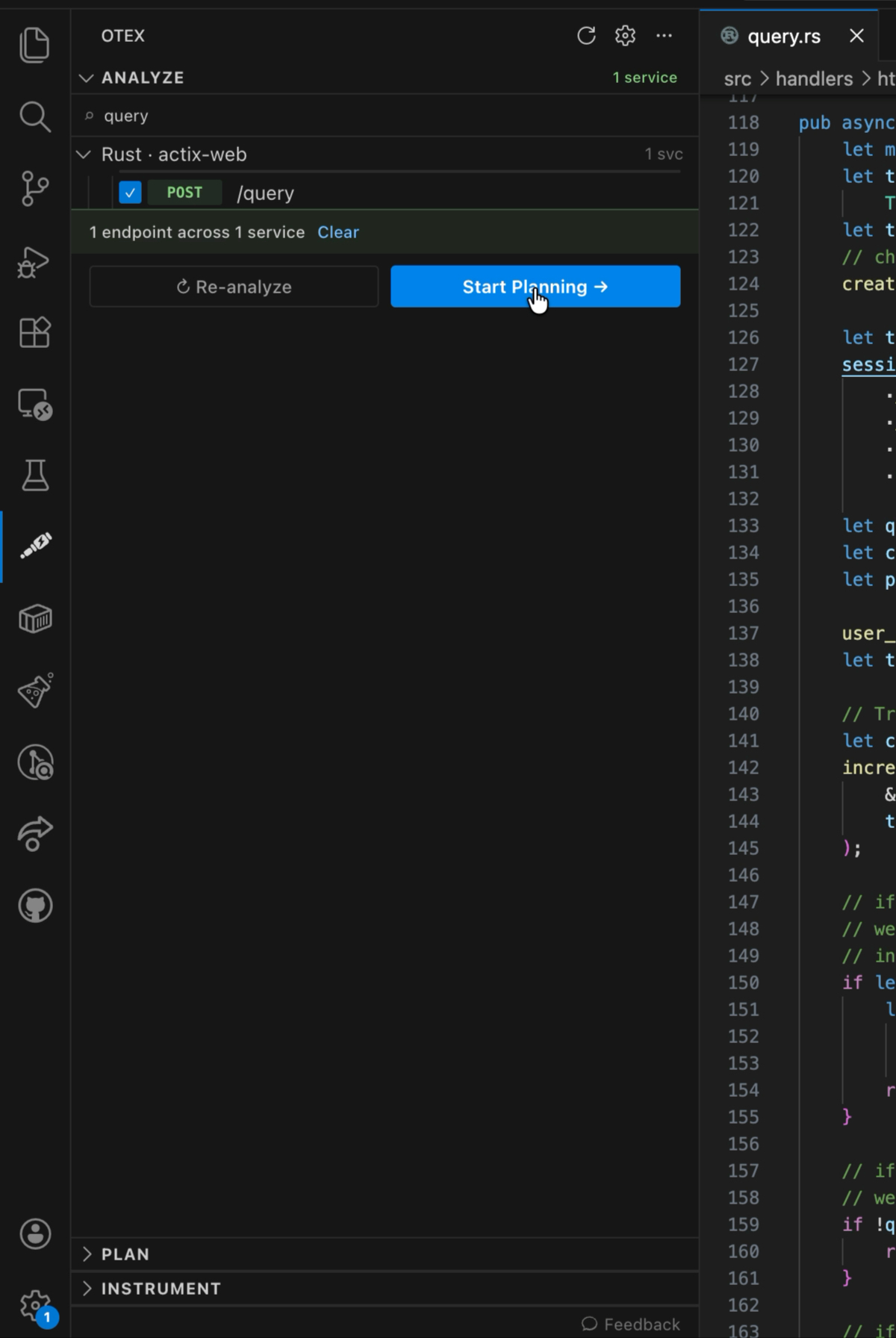
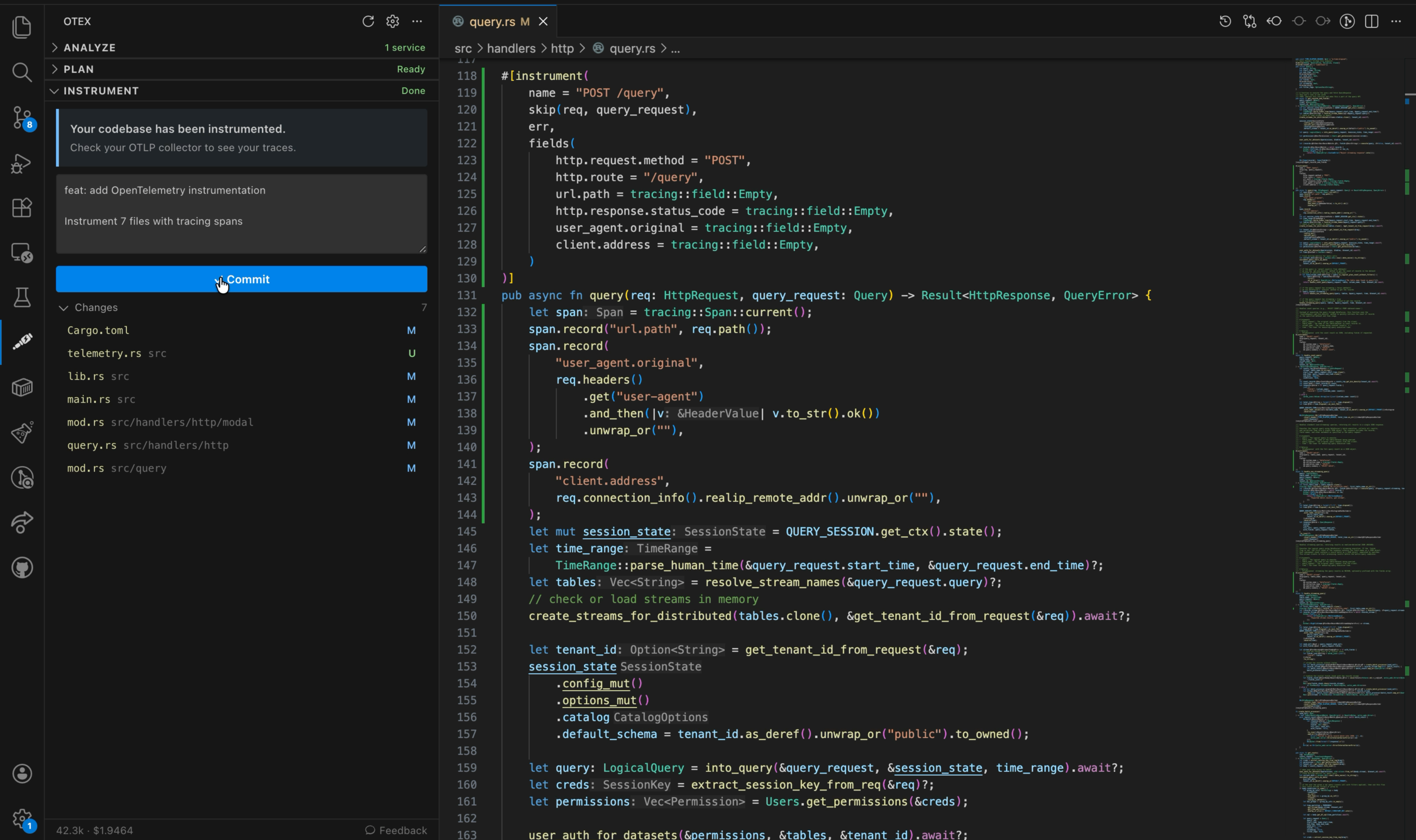
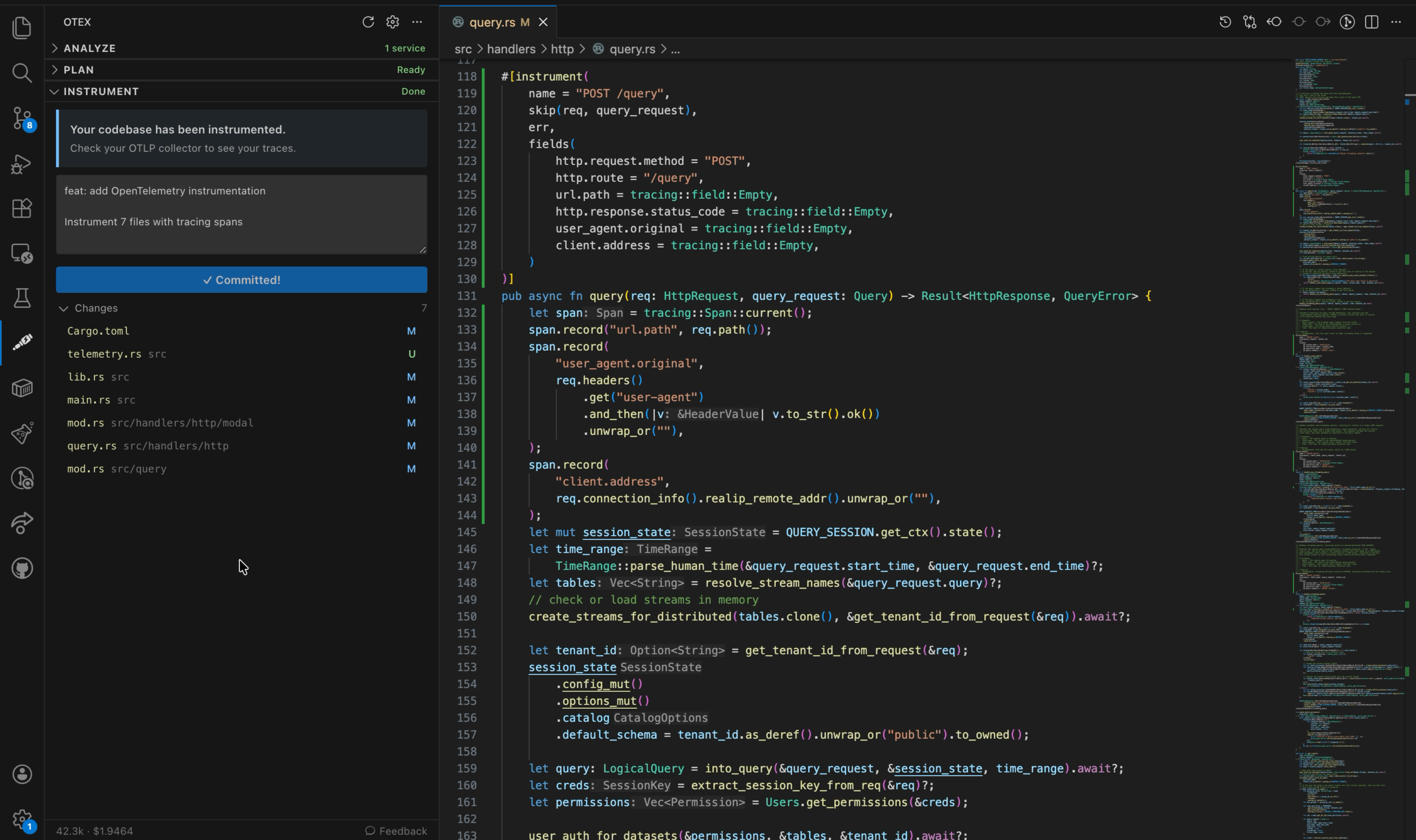
04Commit
01Analyze
02Plan
03Instrument
04Commit
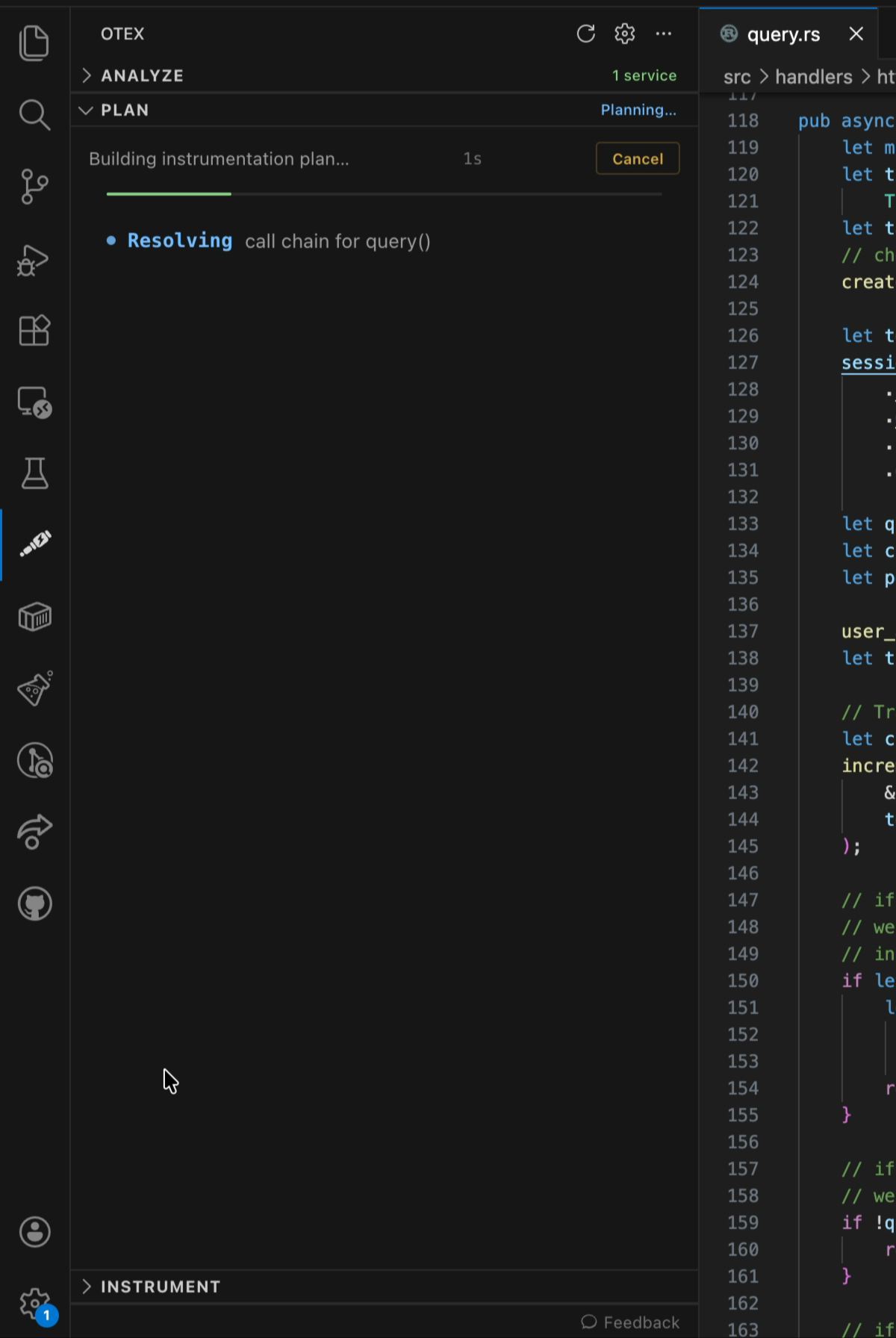
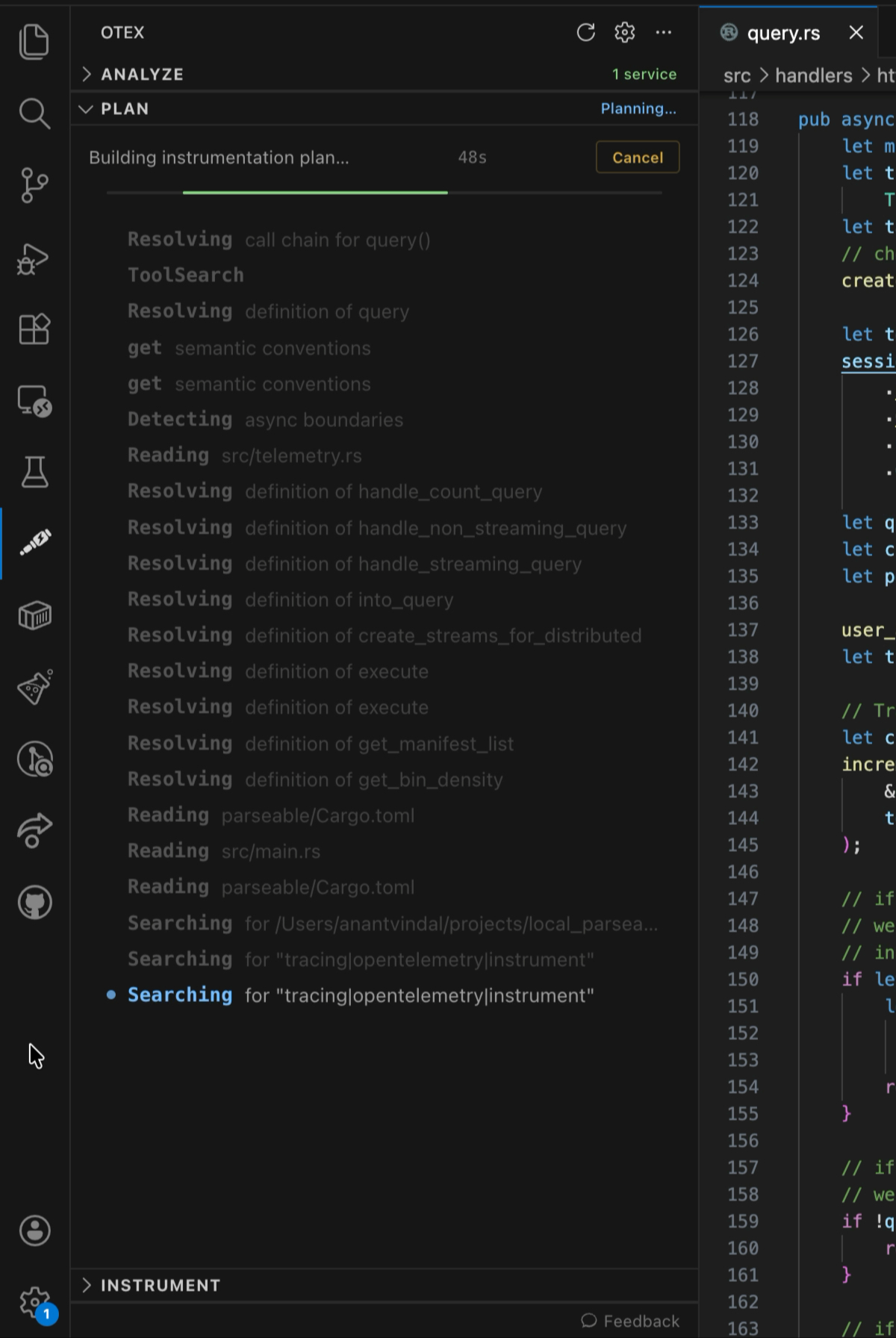
01Analyze
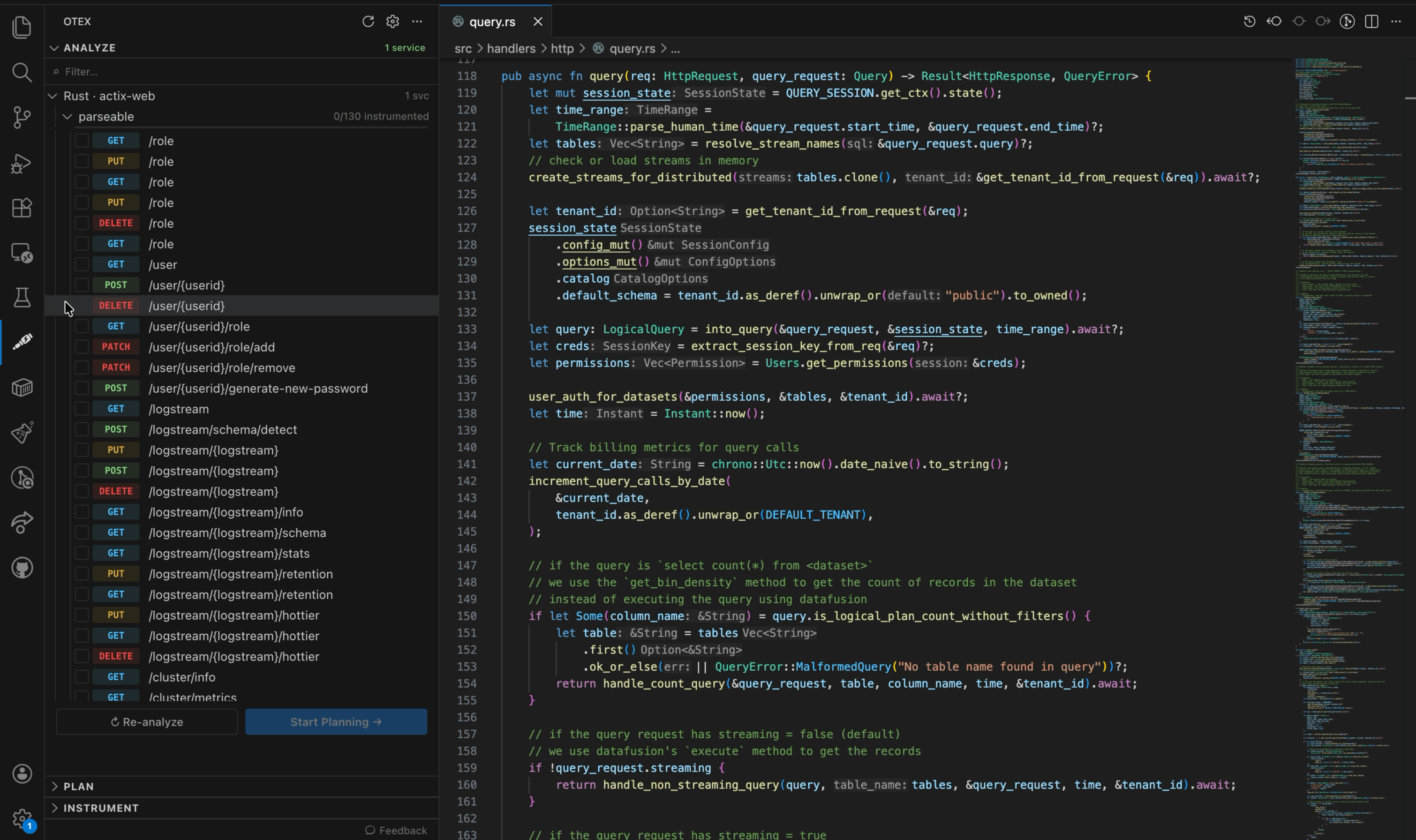
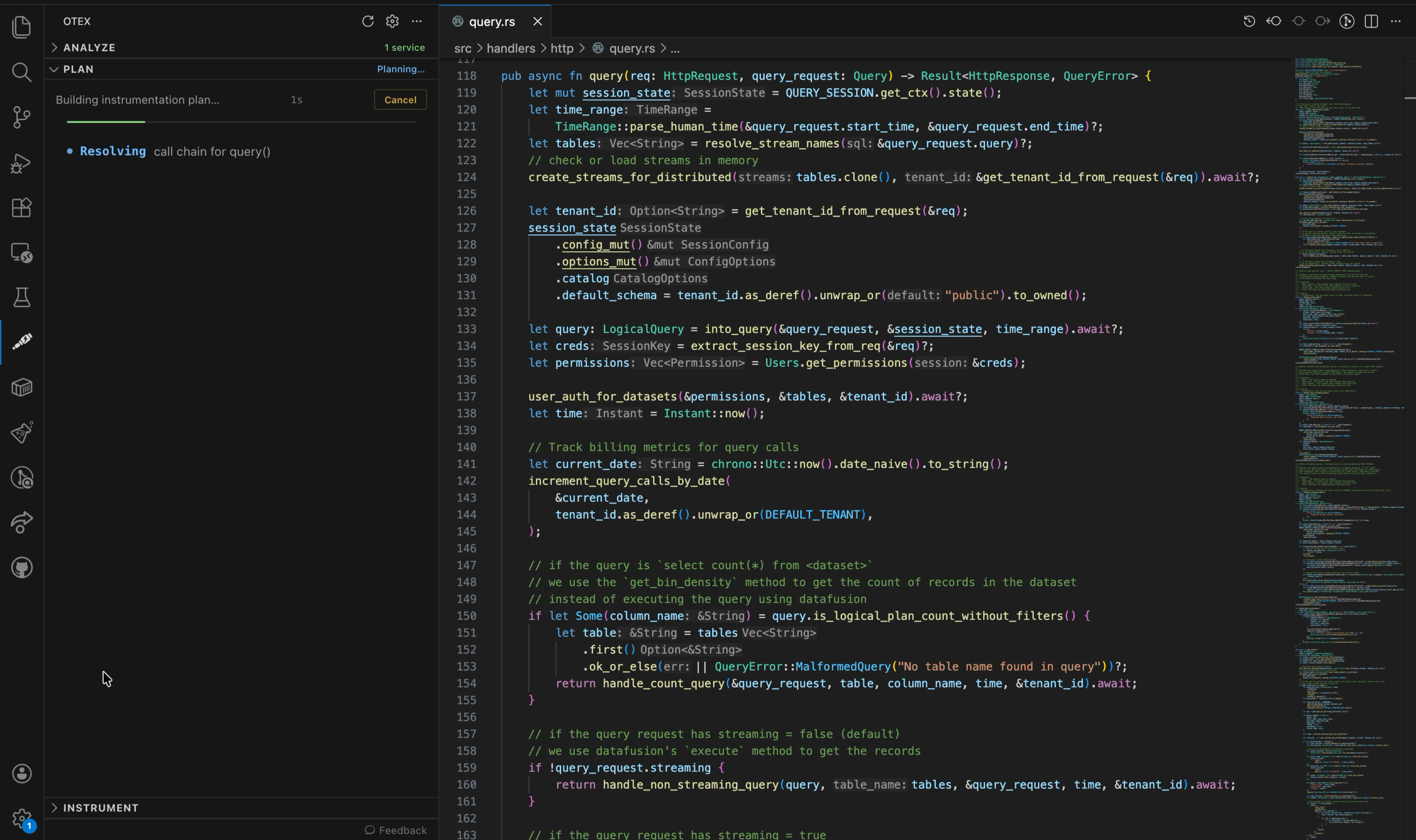
Analyze 1Analyze 2Analyze 3Analyze 1Analyze 2Analyze 3
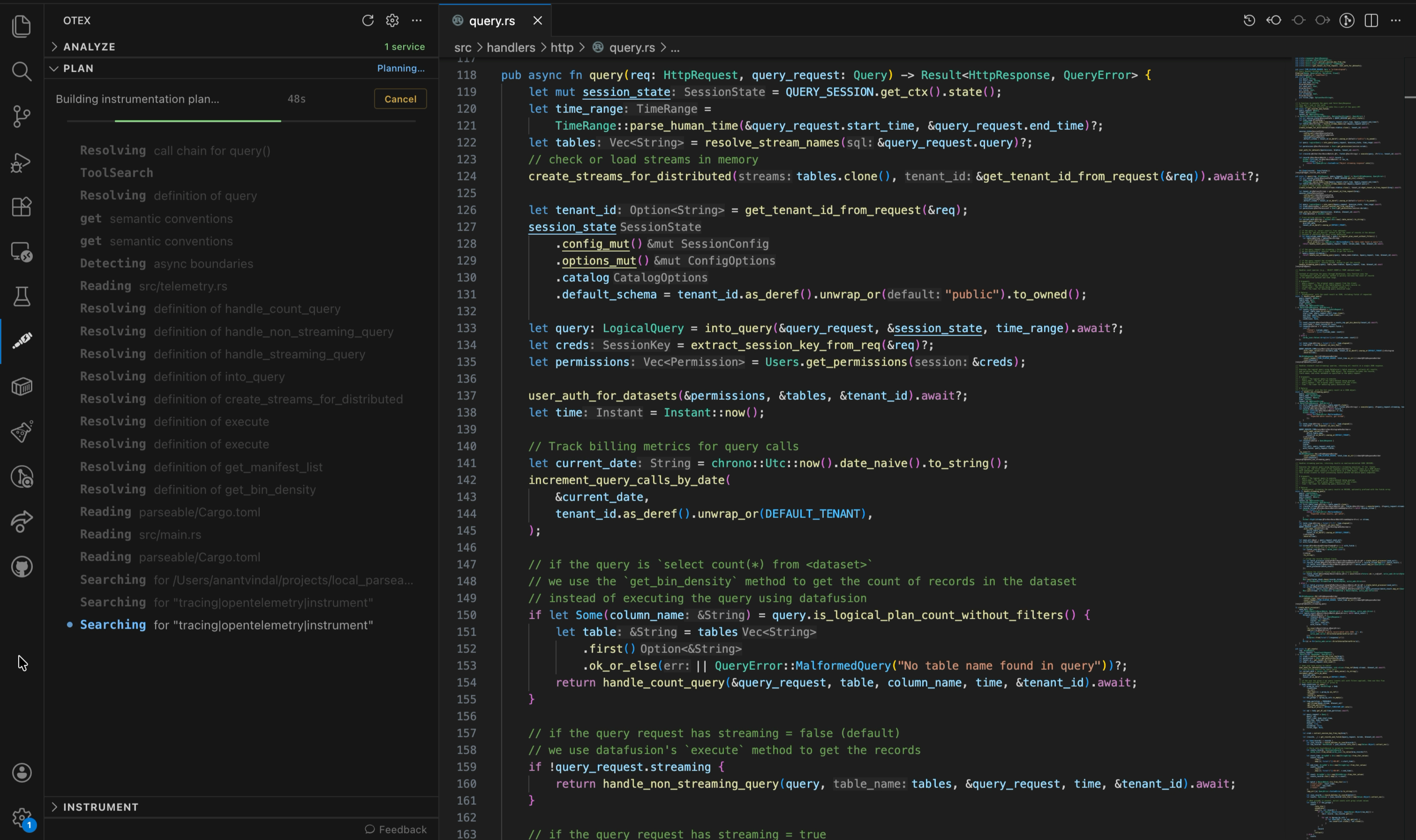
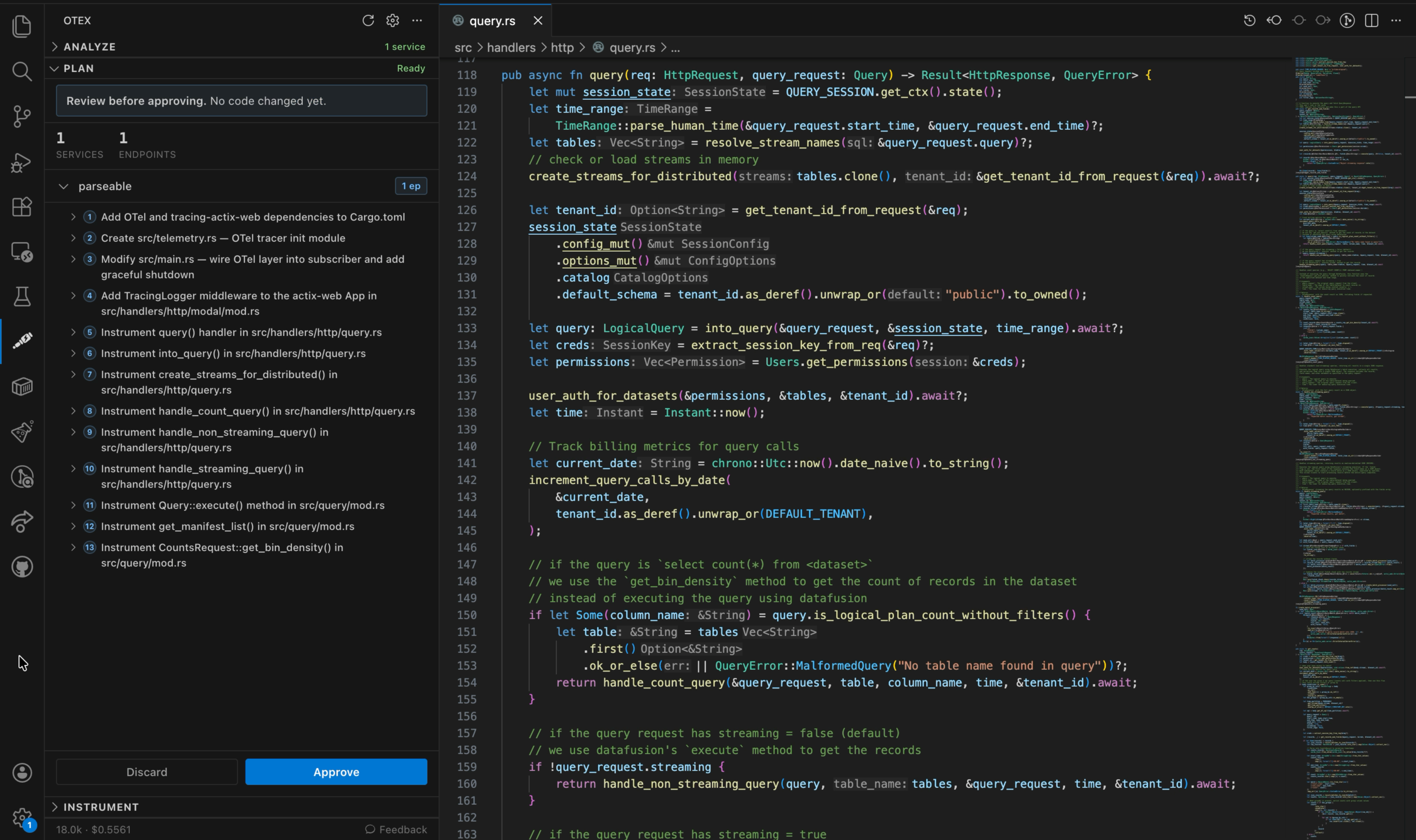
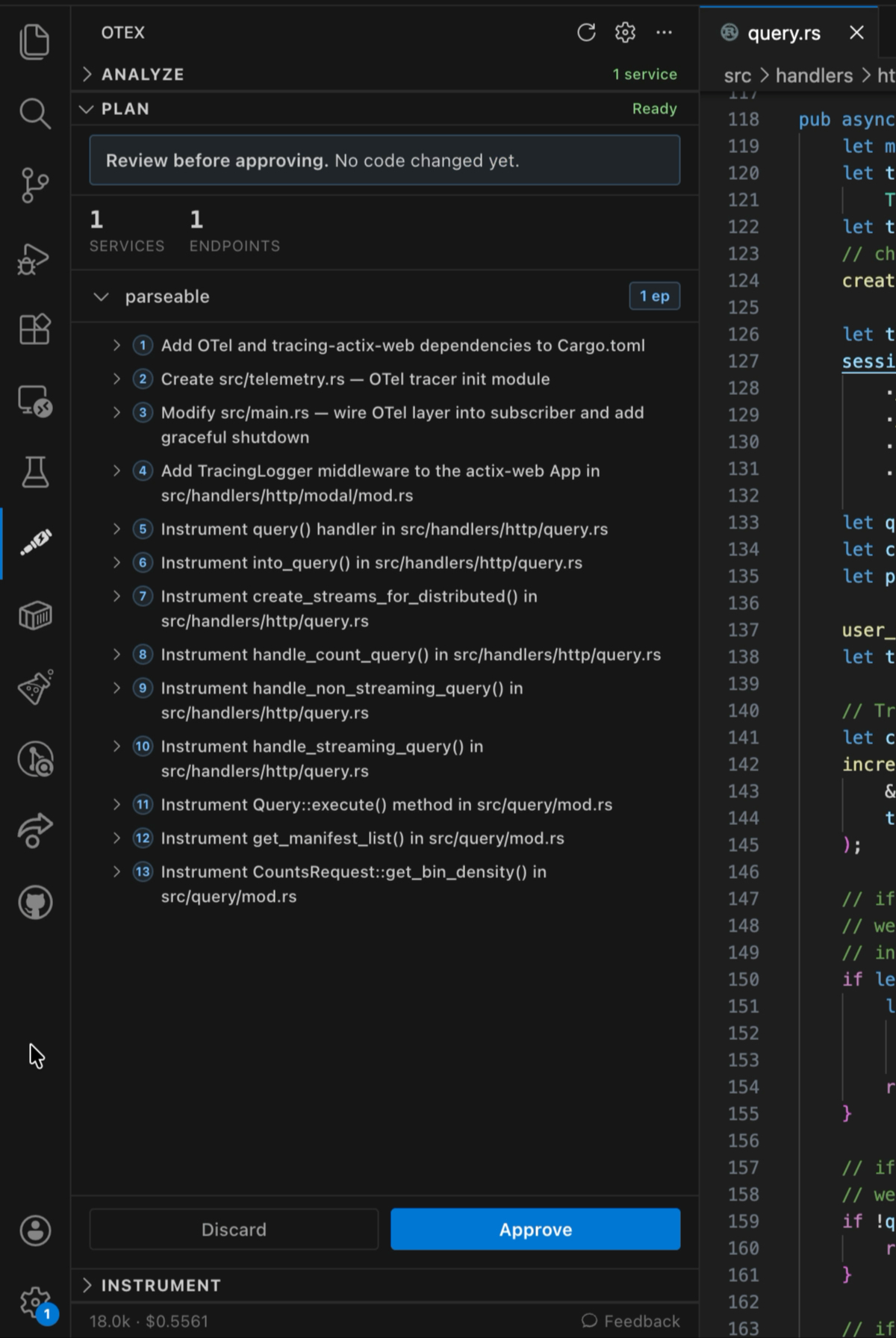
02Plan
Plan 1Plan 2Plan 3Plan 1Plan 2Plan 3
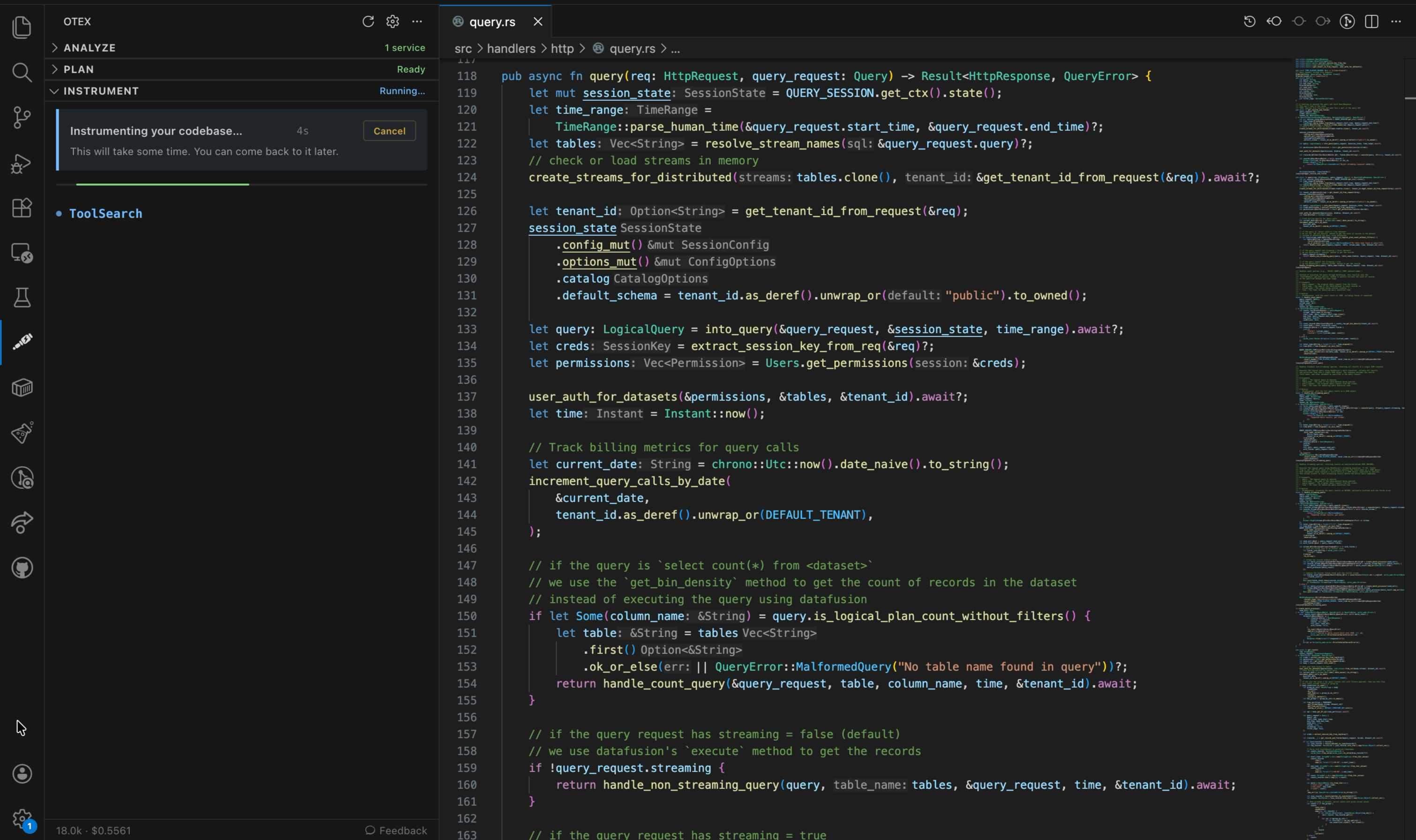
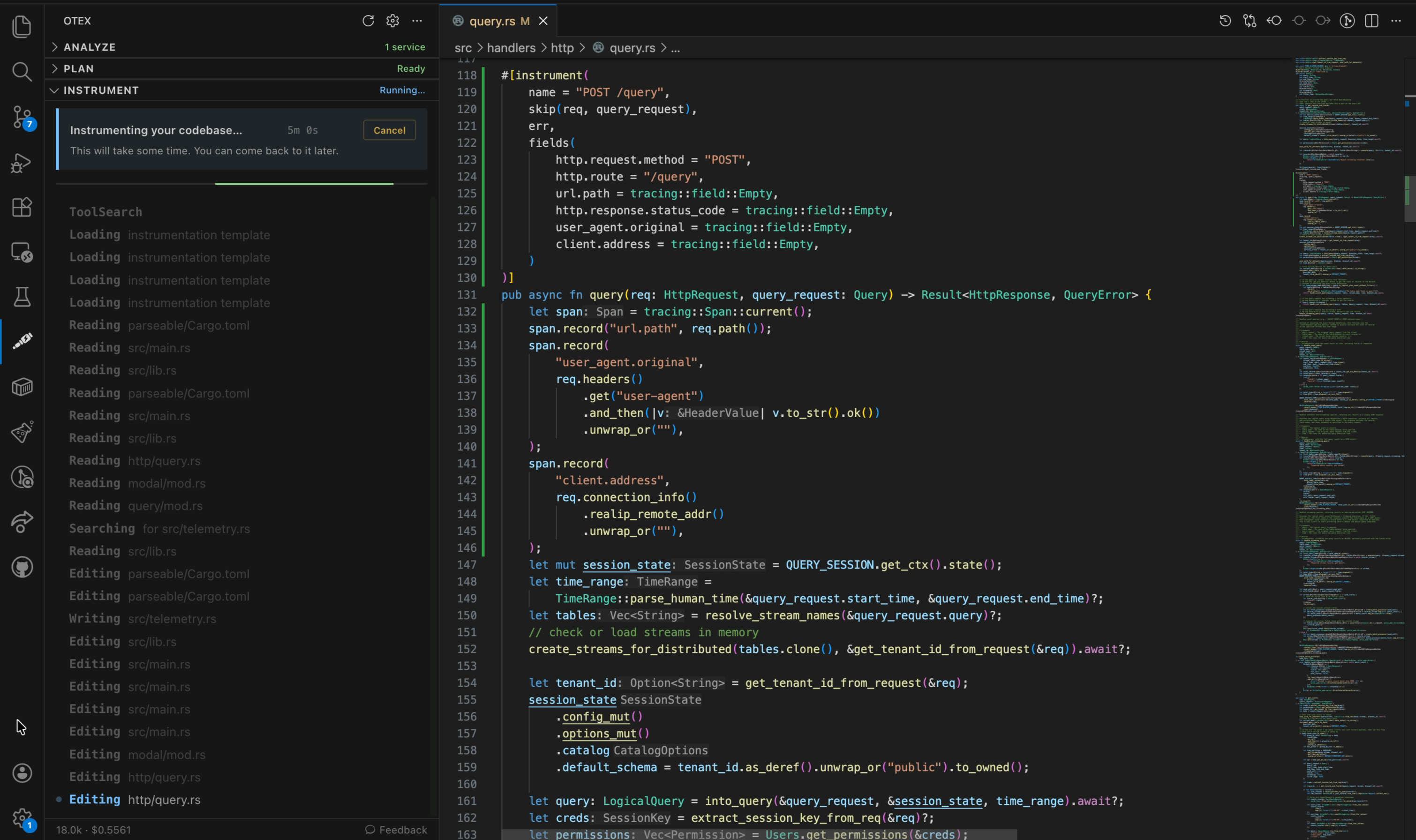
03Instrument
Instrument 1Instrument 2Instrument 1Instrument 2
04Commit
Commit 1Commit 2Commit 1Commit 2
Built for production

Instrumented safely.
You stay in control.

Guardrails, coverage visibility, and spec-correct semantics — built in, not bolted on.

Instrumentation only. Nothing else.
otex operates inside strict guardrails. It adds spans, imports, and OTel setup — and nothing else. Your business logic, error handling, and unrelated files are completely untouched.
Zero scope creep
Run output
$ otex: Instrument
src/routes/users.ts— span added
src/db/queries.ts— span added
src/utils/auth.ts— out of scope
2 files changed · 0 unrelated edits
Continuous coverage monitoring
Always-on visibility into what's instrumented and what isn't. No manual audits — gaps surface automatically as your codebase grows.
Always current
OTel semantics, fully handled
Every attribute name sourced directly from the OTel semantic conventions spec. db.system, http.request.method, rpc.service — correct every time.
Spec-driven
Language support

Works with your stack,
out of the box.

Framework-aware instrumentation for the languages you already use — not generic boilerplate.

Python
Django · Flask · FastAPI
JavaScript
Express · Fastify · NestJS
TypeScript
Express · Fastify · NestJS
Rust
Actix-web · Axum

More languages on the way — Go, Java, Ruby, and others are in progress.

From zero to fully observable

Full observability,
without the toil.

Free extension. Bring your Anthropic API key.
Works with Parseable and any OTLP collector.